Anaerobic Digestion on the Farm Conference 2026

Research, Policy, Industry, and Innovation

9-11 June, 2026, State College, PA

About the Conference:

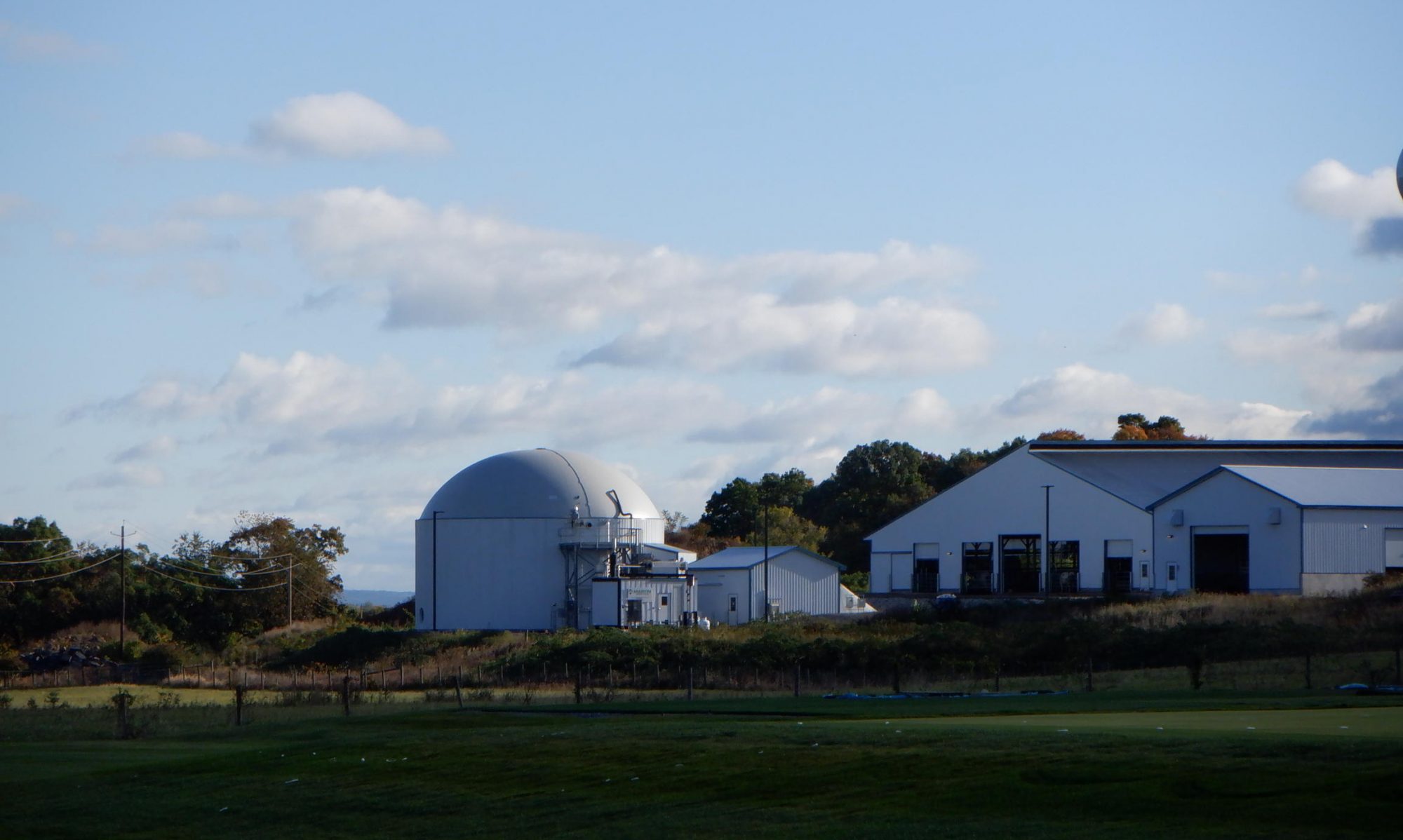
Anaerobic digestion on the farm has experienced a surge of interest and activity, owing to a variety of factors such as technology developments, public support, and increased awareness of its potential for energy production, rural livelihoods, ecosystem services, nutrient management, and other impacts.  As the science, technology, and policy develop in this space, new understanding is emerging as to the benefits vs. drawbacks, real vs. perceived …

Renewable Natural Gas from Manure and Grasses: Business Opportunity Plan for “Green Mallard Farm”

Authors: Gary Musgrave, Bill Lazarus, Dan Ciolkosz, Penn State Extension

Overview:

This business opportunity plan (BOP) describes the steps involved for a hypothetical farm (called “Green Mallard Farm”) to contribute manure to a community anaerobic digester that is operated by a separate digester company. The community digester uses the manure from the farm (and other farms) to produce biogas from manure (and perhaps other feedstocks such as perennial grass and food waste). The biogas may be used to produce electricity …

Renewable Natural Gas from Manure and Grasses: Business Opportunity Plan for “Sleeping Squirrel Farm”

Authors: Daniel Ciolkosz, Michael, Hile, Bill Lazarus, and Gary Musgrave, Penn State Extension

Overview:

This business opportunity plan describes the steps involved in establishing an on-farm anaerobic digester that produces biogas from a combination of manure and perennial grass (in this case, switchgrass), and sells it as Renewable Natural Gas (RNG) for injection into an adjacent pipeline. The overall configuration of the facility is described, sizes and capacities of major equipment are laid out, and estimated costs along with a …

Grass to Gas Winter Webinar Series 2023-24, 24-25

Innovating a New Future for Anaerobic Digestion

Join us for monthly webinars on the emerging science that sits at the juncture of Renewable Natural Gas, Anaerobic Digestion, and Regenerative Agriculture.

Learn from thought leaders who are expanding what is known about transforming our agricultural sector in terms of its energy, economic, and ecological performance.

Engage in discussion about new discoveries about integrating biogas and regenerative agriculture together into the rural economy.

Who Should Attend?

All are welcome!  These webinars will be presenting new and emerging research in …

Grass To Gas Anaerobic Digestion Q&A

This page lists questions and answers from the C-Change GrassToGas project’s PA Extension newsletter.  To be added to the newsletter mailing list, contact GrassToGas@psu.edu.

1. Question: Is switchgrass a good feedstock for biogas digesters?

Answer: Not usually. Anaerobic digestion involves microscopic organisms that eat energy-rich components such as sugars. Lignocellulosic biomass, such as switchgrass, contains sugars, but is structured in a way that specifically prevents easy access to its energy-rich components. Because of the limited accessibility to the energy-rich …

Grass To Gas project

What is it?

The Grass-to-gas project is a 5-year, USDA-funded project that carries out research, extension, and education programs aimed at developing new approaches to Anaerobic Digestion that are economically beneficial to farmers and ecologically beneficial to farms.

Participants:

The project is led by Iowa State University and Penn State University, with a team of partner farmers and companies all working together to grow this opportunity.

Features:

Demonstration Farms, where perennial grass production, cover crops, and their use in biogas …