Safe Chemical Handling in Biodiesel Production

Introduction

Biodiesel is a relatively safe product. It is considered nonflammable and biodegradable. However, the components to make biodiesel can be hazardous in some situations. Biodiesel is made by reacting vegetable oil or animal fat with an alcohol (methanol or ethanol) and a catalyst (sodium hydroxide or potassium hydroxide). Sulfuric and hydrochloric acids are also used in biodiesel production. Methanol, the catalysts, and the acids are toxic chemicals.
 

Methanol is colorless and tasteless and can cause blindness or death if …

Reactors for Biodiesel Production

Introduction

Three general types of reactors are used for biodiesel production: batch reactors, semi-continuous-flow reactors, and continuous-flow reactors.

The batch process is inexpensive, requiring much less initial capital and infrastructure investment. It is flexible and allows the user to accommodate variations in feedstock type, composition, and quantity. The major drawbacks of the batch process include low productivity, larger variation in product quality, and more intensive labor and energy requirements.

The semi-continuous process is similar to the batch process except that …

Rapeseed and Canola for Biodiesel Production

Oil from rapeseed or canola seed, the edible crop varieties, is used in biodiesel energy production. The oil has a low cloud point so it gels at lower temperatures than many other feedstocks.

Canola plants growing at Tennessee State University research farm. Photo: Jason de Koff, Extension Assistant Professor, Tennessee State University.

Contents

Rapeseed

Processing Oilseeds and Oil for Biodiesel Production

How Should Oilseeds Be Processed before Pressing?

Extraneous material should first be removed from the harvested crop seed by screening. This is particularly important to ensure that materials such as small stones are removed prior to crushing and extraction. The seed should also be passed over a magnet to remove metal pieces.

Processors sometimes heat the seeds prior to processing to increase the oil yield. When pressing for fuel production, it is possible to use engine exhaust to warm the …

Oilseed Handling for Biodiesel Production

Introduction

Many types of oil-bearing seeds and nuts can be used to make biodiesel. Commonly used feedstocks for the production of biodiesel include soybean, rapeseed/canola, used (waste) vegetable oils, and tallow/lard (animal fat). Mustard biodiesel is being studied at the University of Idaho, and Montana State University is conducting research on camelina for biodiesel production. Safflower, sunflowers, corn, and even hazelnut produce oil that could be used for biodiesel. Warm-climate tree oils such as palm oil, coconut, and …

Miscanthus for biofuel production additional resources

Related articles and information

(Excerpted from Miscanthus for Biofuel Production Article)

  • Amalraj V.A. & Balasundaram N. (2006) On the taxonomy of the members of ‘saccharum complex’. Genetic Resources and Crop Evolution, 53, 35-41.
  • Beale C.V., Bint D.A. & Long S.P. (1996) Leaf photosynthesis in the c-4-grass miscanthus x giganteus, growing in the cool temperate climate of southern england. Journal of Experimental Botany, 47, 267-273.
  • Burner D.M., Tew T.L., Harvey J.J. & Belesky D.P. (2009) Dry matter partitioning and quality

Miscanthus (Miscanthus x giganteus) for Biofuel Production

Looking for a perennial biomass crop that grows well on marginal land, needs little fertility, and weed management only during establishment? Research on giant miscanthus shows it produces twice the biomass of switchgrass.

Miscanthus

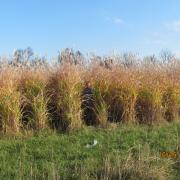
Giant miscanthus. Photo: Jeff Skousen.

Contents

Abstract

Giant …

Farm Energy Community Page

Welcome to the eXtension Farm Energy web resource brought to you by University Extension specialists throughout the United States.


The eXtension Farm Energy website is designed to provide timely and practical energy information for agricultural producers and service providers that enhances profitability, conserves natural resources, and promotes the well-being of local communities.


Who Are Our Specialists?

The Farm Energy Community of Practice is a virtual, or on-line, community which includes over 240 members from land-grant universities and other agencies, including …

Handling Strong Acids in Biodiesel Production

Sulfuric and Hydrochloric Acids

Acids may be used in treating high free fatty acid (FFA) feedstocks, neutralizing base catalyst and splitting soaps in the washing process, and/or in treating the crude glycerin by-product. Acids are colorless and can be extremely damaging to all body tissue. Acids cause rapid tissue destruction and serious chemical burns. Their vapors can cause eye, nose, and throat irritation; shortness of breath; pulmonary edema; or other serious ailments. Workers should wear acid-resistant protective clothing and gloves, …

Handling Strong Bases in Biodiesel Production

Sodium and Potassium Hydroxides/Methoxides

Used to catalyze the transesterification reaction, sodium and potassium hydroxide are extremely corrosive.

The hydroxides are dry flakes or pellets and must be dissolved in methanol, which produces “methoxides” concentrated in methanol. The dust from the hydroxides is an airway irritant and will burn unprotected skin and eyes, especially when handled manually. Dissolving the hydroxides in alcohol is an exothermic reaction and can generate a considerable amount of heat. Stirring the liquid in an open container …