Research Summary: Exploring On-Farm Pyrolysis Processing of Biofuels

The USDA-ARS FarmBio3 project explores whether on-farm fast-pyrolysis processing units could be a component of an efficient and cost-effective decentralized system of biofuel production and processing.

truck
FarmBio3 mobile pyrolysis system travels among farms simulating the real-world scenario of multiple on-farm units that convert feedstocks to bio-oil, which is delivered to a regional biorefinery. Photo credit: USDA-ARS Pyrolysis Team.

Table of Contents

U.S. Billion-Ton Update Shows Farms and Forests Have Huge Potential for U.S. Bioenergy Future

U.S. farms and forests have the potential to supply enough biomass to meet the Renewable Fuels Standard and replace more than a third of petroleum use with bioenergy by 2030, according to the U.S. Billion-Ton Update


Table of Contents

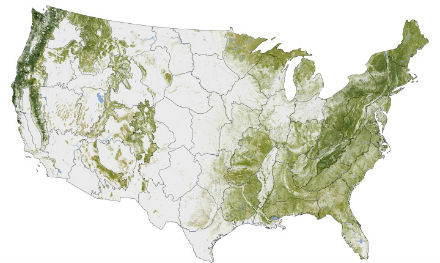
NASA Earth Observatory: Where The Trees Are. Photo:
NASA Earth Observatory: Where The Trees Are. Photo: Wikipedia.

Resources from NEWBio: The Northeast Woody/Warm-season Biomass Consortium

NEWBio logo

Funded by AFRI. Learn More.

    The Northeast Woody/Warm-season Biomass Consortium (NEWBio) is a regional network of universities, businesses, and governmental organizations dedicated to building robust, scalable, and sustainable value chains for biomass energy in the Northeast. Driven by the broad societal benefits that sustainable bioenergy value chains could provide, NEWBio aims to overcome existing barriers and dramatically increase the sustainable, cost-effective supply of lignocellulosic biomass while reducing net greenhouse gas emissions, enhancing ecosystem services, and building vibrant communities.


    Ask an Expert logo

    NEWBio

    Research Summary: Triploid Hybrids of Shrub Willow Yield More Biomass Than Diploids and Tetraploids

    Research finds triploid hybrids of shrub willow yield the highest biomass, leading to improved cultivars for renewable energy.

    Fred Gouker, Cornell Univ.; 3rd season shrub-willow selection trial in Geneva, NY. 2011. Photo: L. Smart.
     

    Table of Contents


    Abstract

    Research into the genetics and biomass composition of shrub willow shows that triploid hybrids generally outperform diploid and tetraploid hybrids. This …

    BCAP Helps Commercialize Shrub Willow for Bioenergy in Northern New York

    Three-year old willow biomass crops on a four-year old root system prior to first harvest (Auburn, NY).
    Three-year old willow biomass crops on a four-year old root system prior to first harvest (Auburn, NY). Photo: Timothy Volk, SUNY ESF.

    Farmers growing shrub willow for bioenergy are helped by a BCAP project in New York State that aims to make the biomass crop more financially viable.


    Table of Contents

    The Economics of Switchgrass for Biofuel

    The profitable production of switchgrass for biofuel  today depends  primarily on the price of oil, as well as the Renewable Fuel Standard (RFS).

    Sponsoring Partner

    CenUSA-Logo
    Funded by AFRI. Learn More.

    Table of Contents

    Introduction

    In the Renewable Fuel Standard (RFS2) legislation passed …

    Safflower (Carthamus tinctorius L.) for Biofuel Production

    Safflower Field Trials at Utah State University Extension

    Safflower (Carthamus tinctorius L.) is a crop once grown for its dye now is grown for its oil in parts of Canada and the United States (50 percent of U.S. acreage is in California). Safflower is drought resistant and can be planted in irrigated and dryland areas as long as soils are well drained. Cool, wet soils delay uniform emergence, and periods of heavy rain can increase disease levels and reduce yields.…

    Storing Perennial Grasses Grown for Biofuel

    No matter how you store harvested perennial grasses grown for biofuel feedstock, be sure to minimize dry matter losses and maintain uniform physical and chemical properties.


    Sponsoring Partner

    CenUSA-Logo
    Funded by AFRI. Learn More.

    Table of Contents

    Abstract

    After-harvest storage methods of switchgrass and other perennial grasses grown for biofuel have a significant effect on the profitability …

    Research Summary: Management Practices Impact Greenhouse Gas Emissions in the Harvest of Corn Stover for Biofuels

    Residue management and tillage can reduce greenhouse gas emissions from soils during production of corn stover for biofuel.


    Sponsoring Partner

    CenUSA-Logo
    Funded by AFRI. Learn More.

    Table of Contents


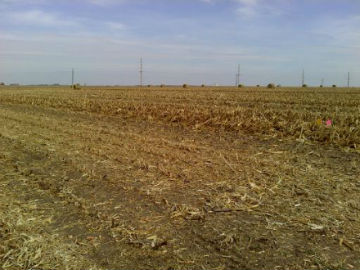
    Corn stover trial field. Photo: Virginia L. Jin.


    Research Purpose

    Crop residues such as corn stover are on track to make up a large part of our future renewable-energy supply. …

    Research Summary: Development of a Single-Pass Cut-and-Chip Harvesting System for Short Rotation Woody Crops

    Three-year old willow biomass crops on a four-year old root system prior to first harvest (Auburn, NY).
    Three-year old willow biomass crops on a four-year old root system prior to first harvest (Auburn, NY). Photo: Timothy Volk, SUNY ESF.

    Woody biomass throughput is tripled using a new single-pass cut-and-chip harvesting system.  Operator experience, crop characteristics, ground conditions, and speed all affect throughput.

    Table of Contents

    Introduction

    Many types of specialized machinery for harvesting short rotation woody crops …